Turn enterprise data into decision-ready intelligence for better forecasting, operational visibility, and business performance.
Effective analytics connects business questions with reliable measures, giving teams a clearer basis for planning and operational decisions.
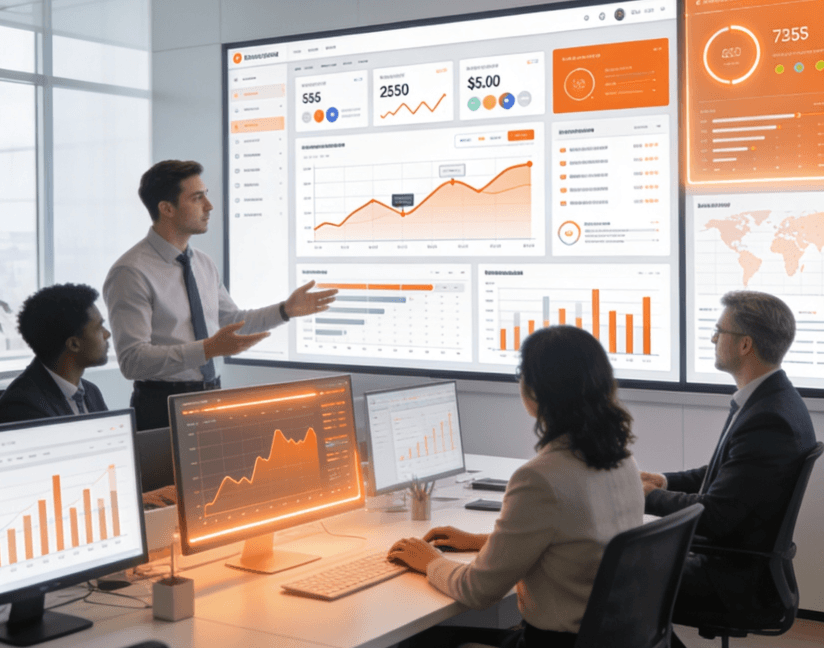
Proclink’s data analytics services span consulting and implementation, translating business priorities into analytical models and reporting that teams can use in daily operations.
Business intelligence establishes a consistent view of performance. Predictive analytics extends that view by anticipating changes in demand, identifying emerging risks, and informing planning decisions. The right approach depends on the decision being made and the information available.
Value comes from applying those findings within business processes. Clear KPI definitions and timely information give teams a common basis for evaluating results, investigating deviations, and deciding when to act.
Analytics loses value when reporting and models are separated from the decisions they inform.
Critical decisions depend on manually reconciled spreadsheets
Forecasts rely on inconsistent assumptions across functions
Conflicting KPI definitions reduce trust in reported results
Reporting delays leave teams responding to outdated information
Analytical outputs remain outside established operational workflows
Unclear ownership delays action on significant findings
Enterprise analytics services connect performance insight with the planning and execution decisions that matter.
Present consistent performance measures through clear dashboards and reports tailored to each team’s responsibilities.
Use predictive analytics to anticipate changing conditions and evaluate assumptions before committing to operational plans.
Identify performance deviations and investigate their drivers so teams can prioritize an informed response.
Embed analytical outputs into existing workflows so findings inform decisions at the point of execution.
Establish shared KPI definitions so operational and financial teams evaluate performance on a consistent basis.
Extend proven reporting and analytical models across business units while retaining relevant local requirements.
We define the decision first, then develop and integrate the analytics needed to inform it.

Assess decision needs and existing reporting gaps.
Define shared measures and analytical requirements.
Develop and validate reports and forecasting models.
Embed insights into established operational workflows.
Refine analytics through usage and performance feedback.
Measure analytics value through reporting efficiency, forecast accuracy, and the timely use of insight.
Enterprise Analytics Deployments
Improved Data Access Visibility
Faster Operational Coordination
Planning Efficiency Improvement

Identify where reporting gaps or forecasting limitations are affecting your most important business decisions.
Data analytics services shaped by the operating requirements of manufacturing, financial services, and other regulated industries.
Explore analytics delivery, industry applications, and the requirements for implementation.
Data analytics consulting services typically include reporting modernization, forecasting, predictive analytics, operational intelligence, analytics integration, enterprise data modernization, and decision support environments.
Manufacturing, financial services, and life sciences organizations use analytics to improve forecasting, operational visibility, reporting, and enterprise coordination.
Analytics outputs are integrated into reporting environments, planning systems, operational workflows, and enterprise decision processes.
Common challenges include fragmented reporting, disconnected systems, inconsistent forecasting, delayed visibility, and low trust in analytics outputs.
Implementation timelines depend on reporting complexity, analytics maturity, operational requirements, and enterprise data readiness.
Modern analytics environments are designed to scale across reporting, forecasting, operational intelligence, and enterprise decision workflows.